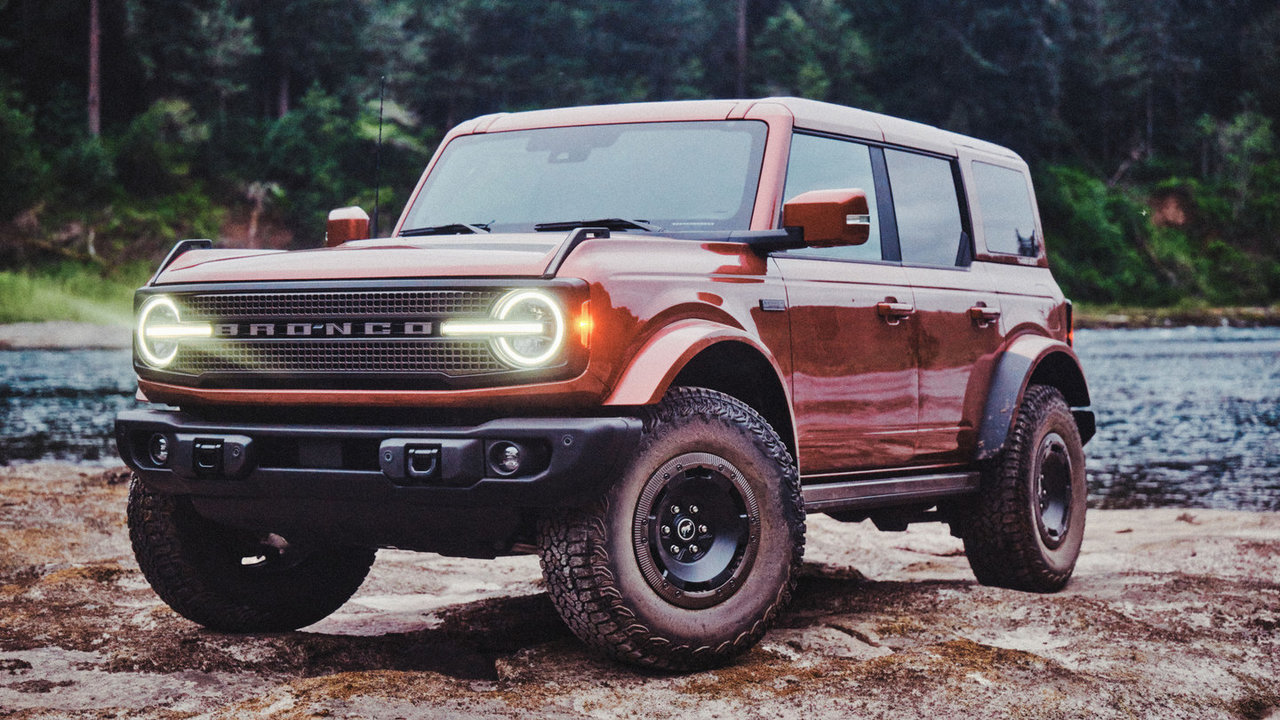
British Columbia driving rarely stays predictable. One stretch of highway turns to gravel, then to a rutted forestry road, then back to wet asphalt before lunch. The 2027 Bronco Filson is built with a mode system meant to answer exactly that kind of shifting terrain, and understanding it before you’re on a trail matters more than knowing which button does what.
This isn’t a list of switches. It’s a guide to choosing the right setting as the road under you changes, which is the actual skill behind using a Terrain Management System well.
What The Terrain Management System Actually Is
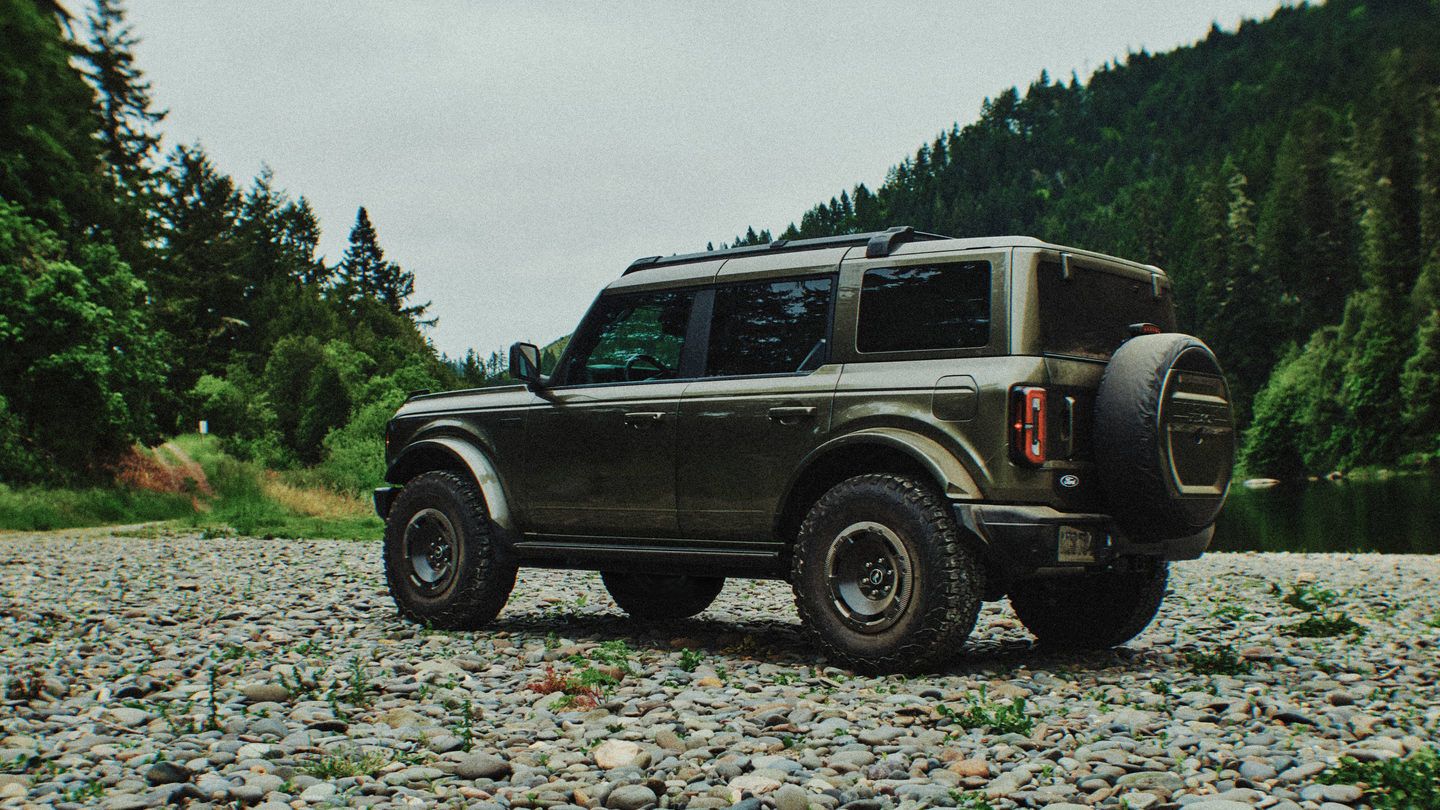
The Bronco Filson comes standard with a Terrain Management System built around G.O.A.T. Modes, Ford’s shorthand for “Goes Over Any Type of Terrain.” The system offers seven driver-selectable modes: Normal, Eco, Sport, Slippery, Baja, Off-Road, and Rock Crawl.
Think of it as one system with seven personalities. Instead of a single, generic setting trying to handle pavement, gravel, mud, and rock crawling equally well, each mode is meant for a different kind of driving.
The modes aren’t decoration. They sit on top of hardware that’s standard on every Bronco Filson: front and rear electronic locking differentials, Fox shocks with internal bypass technology, and 35-inch rugged-terrain tires, all part of the standard Sasquatch package.
How Drivers Select And Use The Modes
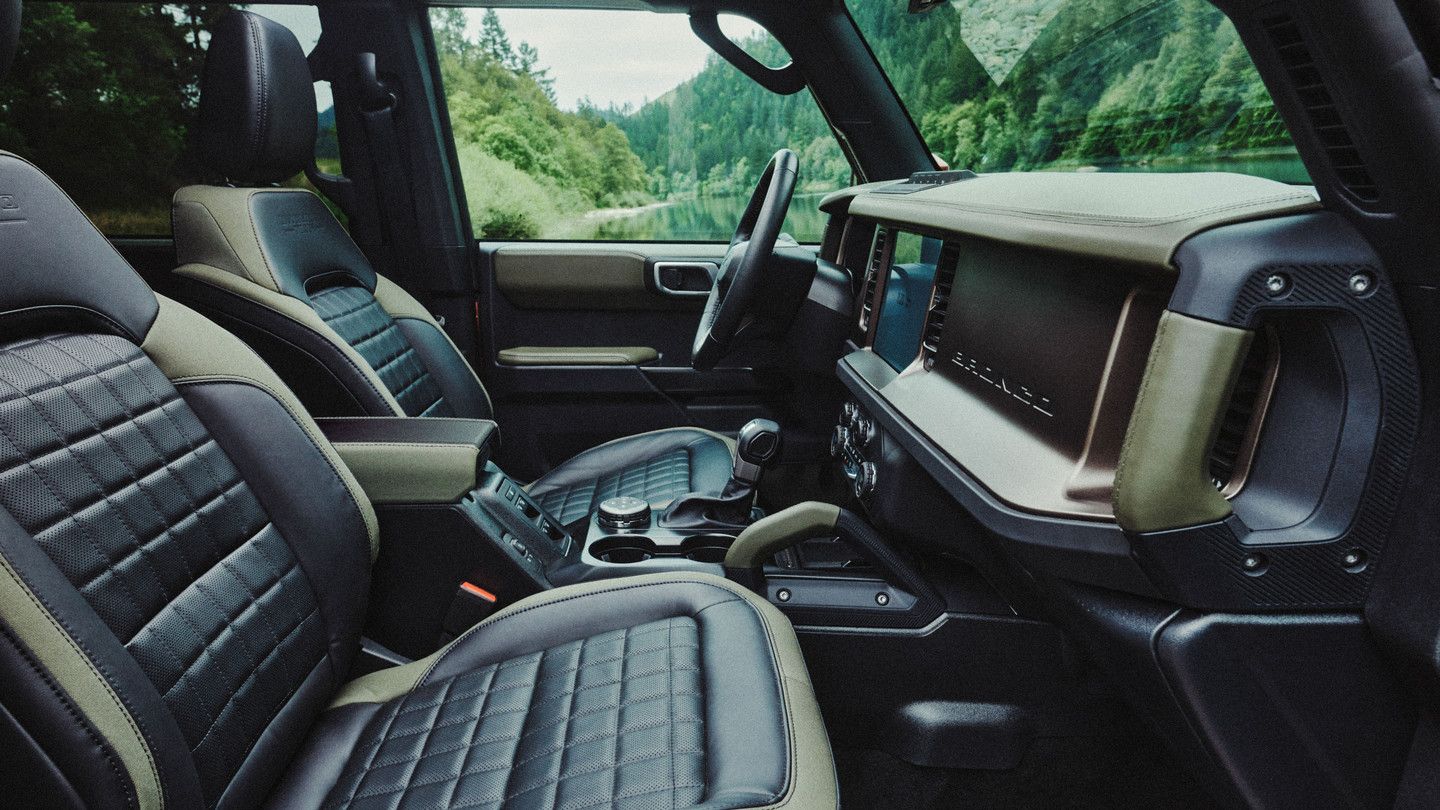
Switching modes is a physical action through a dedicated dial. The G.O.A.T. Modes dial carries brass accents to match the rest of the Filson-inspired cabin, and turning it is how a driver moves between Normal commuting and Rock Crawl.
The modes group naturally by the kind of driving they suit. Normal, Eco, and Sport cover everyday road use, from a fuel-conscious commute to a livelier response for open highway stretches. Slippery, Baja, Off-Road, and Rock Crawl are built around lower-traction and trail-focused situations, from wet or loose surfaces to technical, low-speed terrain.
Alongside mode selection, the Bronco Filson includes Trail Turn Assist, which tightens the off-road turning radius, and Trail 1-Pedal Drive, which enables precise, confident slow-mode rock crawling.
The cabin supports all of this with a standard 12-inch touchscreen running SYNC 4, which gives the driver access to the standard 360-degree camera system and apps like onX off-road trail maps through Apple CarPlay and Android Auto. A digital rearview mirror with washer keeps sightlines clear even when the cargo area is loaded, which matters when visibility already gets tricky on a narrow trail.
Why This Matters On BC Roads And Trails
British Columbia’s terrain rarely commits to one type of surface for long. Coastal rain turns pavement slick, forestry roads shift from packed gravel to loose rock, and mountain access routes can drop into a rutted, technical section without warning.
A Bronco Filson driver who leaves the system in one setting through all of that is leaving capability on the table. The same SUV can feel noticeably different depending on the selected mode, because the mode is meant to change how the vehicle responds to the driver’s inputs, not just how it looks on a dial.
Choosing the wrong mode for the surface in front of you is one of the most common mistakes new off-road drivers make. Leaving a road-oriented mode selected on a loose, technical climb, or staying in a trail-focused mode for a long highway stretch, works against the vehicle rather than with it.
The locking differentials, Fox shocks, and 35-inch tires are standard across every Bronco Filson, so the hardware for handling BC’s mixed conditions is already there. The mode system is what tells that hardware how to behave for the surface you’re actually on.
Who Gets The Most Out Of This System
Drivers who split their time between paved commutes and unpaved access roads benefit the most from learning the full range of modes, rather than defaulting to Normal and leaving it there. Someone who only ever drives pavement will rarely need Baja or Rock Crawl, but a Bronco Filson owner heading toward forestry roads, backcountry campsites, or mountain trailheads will use most of the lineup over a single season.
The value isn’t in memorizing seven names. It’s in recognizing, before conditions change, which mode matches what’s coming next, whether that’s wet pavement on the way out of town or a technical crawl further down the road.
See The Bronco Filson’s Setup At Suburban Motors Ford
The Bronco Filson pairs a driver-selectable Terrain Management System with standard trail hardware, cabin technology, and utility features built around Filson’s rugged design language. Together, they’re meant to give one SUV a wide range of behaviour across BC’s mixed roads and trails.
Visit Suburban Motors Ford in Victoria to see the G.O.A.T. Modes dial, the 12-inch touchscreen, and the standard Sasquatch hardware in person, and talk through which settings fit the terrain you drive most with a product specialist.