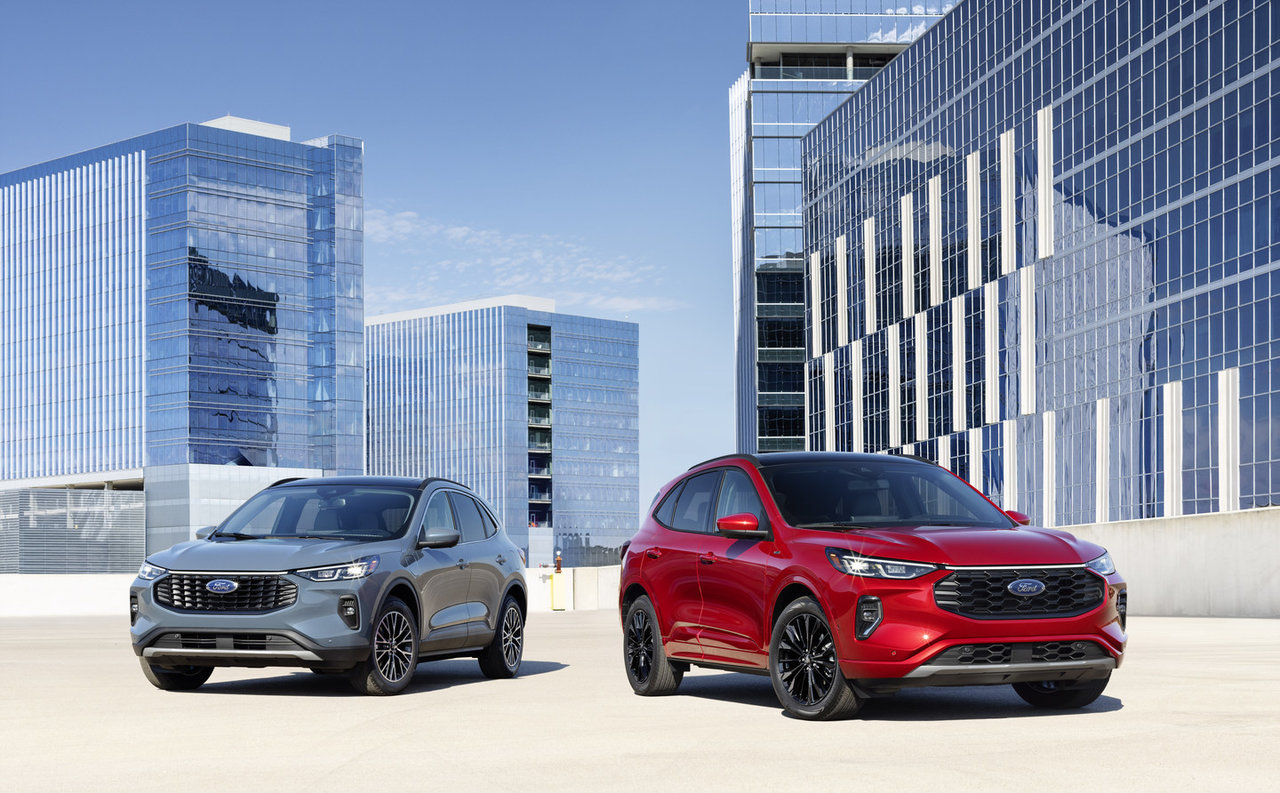
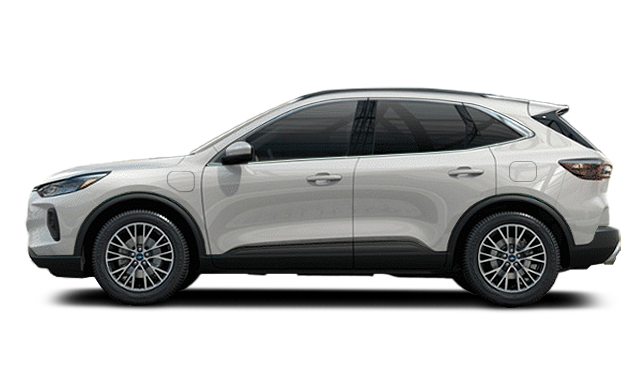
If you drive around Victoria's hilly terrain and stop-and-go traffic on Douglas Street or the Trans-Canada Highway, fuel economy matters. The 2026 Ford Escape Hybrid returns 6.0 L/100 km combined - significantly better than the gas-only 1.5L EcoBoost's 8.0 L/100 km. That difference adds up over a year of commuting, errands, and weekend trips to the Island's parks and beaches.
The Hybrid uses a 2.5L four-cylinder engine paired with an electric motor for 192 hp total. The gas Escape offers two turbocharged EcoBoost engines: a 1.5L making 180 hp or a 2.0L delivering 250 hp. Both powertrains seat five, offer available AWD (except the Plug-In Hybrid, which is FWD only), and share the same cargo flexibility. The question is whether the Hybrid's fuel savings justify the price difference for your driving patterns.
2026 Escape Fuel Economy Ratings
The 2026 Escape Hybrid achieves 5.6 L/100 km city and 6.5 L/100 km highway, averaging 6.0 L/100 km combined. The 1.5L EcoBoost gas engine returns 8.0 L/100 km combined in FWD configuration. Add AWD and consumption rises to 8.4 L/100 km combined. The 2.0L EcoBoost AWD sits at 9.1 L/100 km combined.
The Plug-In Hybrid variant delivers 2.3 Le/100 km combined with up to 60 km of electric-only range. On gasoline alone, it matches the standard Hybrid at 5.9 L/100 km combined. The PHEV produces 210 hp total system output but is only available in FWD.
Fuel Economy Comparison Table
|
Powertrain
|
City
|
Highway
|
Combined
|
|
2.5L Hybrid FWD/AWD
|
5.6 L/100 km
|
6.5 L/100 km
|
6.0 L/100 km
|
|
1.5L EcoBoost FWD
|
8.9 L/100 km
|
6.9 L/100 km
|
8.0 L/100 km
|
|
1.5L EcoBoost AWD
|
9.2 L/100 km
|
7.4 L/100 km
|
8.4 L/100 km
|
|
2.0L EcoBoost AWD
|
10.2 L/100 km
|
7.6 L/100 km
|
9.1 L/100 km
|
The Hybrid's advantage is most visible in city driving, where regenerative braking recaptures energy normally lost when slowing down. Highway efficiency is closer between the Hybrid and gas models because regenerative braking plays a smaller role at steady speeds.
FWD vs AWD Efficiency
AWD adds capability on wet roads and gravel logging routes but typically increases fuel consumption. The 1.5L EcoBoost AWD uses 0.4 L/100 km more combined than the FWD version. The Hybrid maintains the same 6.0 L/100 km combined rating whether you choose FWD or AWD, which is unusual in the segment.
The Escape's AWD system disconnects the rear driveline when traction isn't needed, switching automatically to FWD to reduce drag and improve efficiency. If you live in a neighbourhood with steep hills or frequently drive to Tofino or Port Renfrew in winter, AWD adds confidence without the fuel penalty you'd see in most competitors.
The Plug-In Hybrid is FWD only. If you need AWD and want electrified efficiency, the standard Hybrid is your option.
Real-World Fuel Economy Expectations
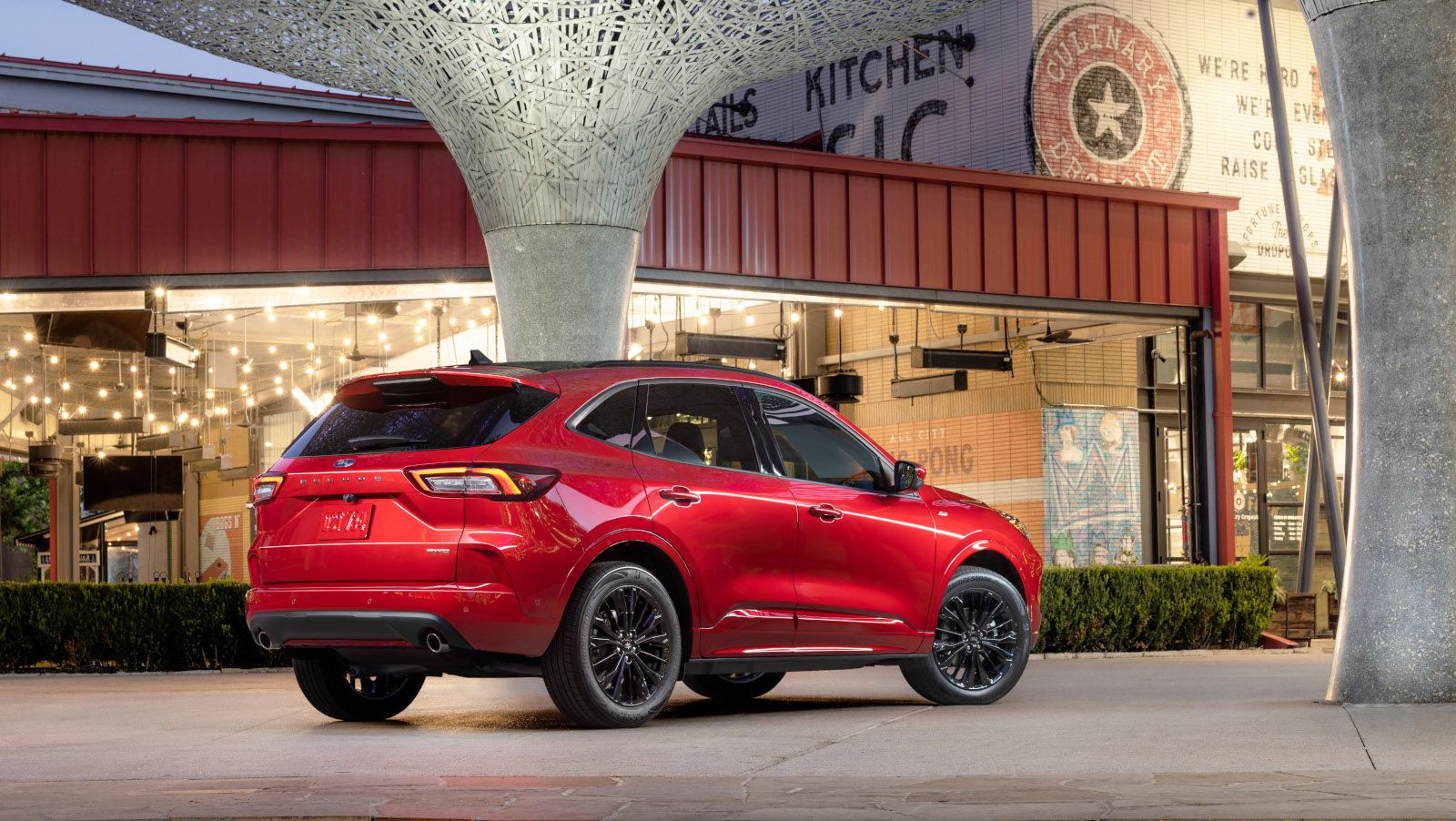
Official ratings are measured in controlled lab conditions. Real-world consumption depends on driving style, terrain, weather, and cargo load.
In Victoria's pairing of urban traffic and highway commuting, the Hybrid typically delivers close to its rated 6.0 L/100 km combined. Aggressive acceleration, frequent short trips, and heavy HVAC use can push consumption higher. The gas Escapes show similar variability. The 1.5L EcoBoost FWD can achieve its 8.0 L/100 km combined rating with steady highway driving but may climb to 9-10 L/100 km in stop-and-go traffic.
Cold weather affects all powertrains. The Hybrid's battery operates less efficiently in freezing temperatures, which can reduce its fuel economy advantage slightly. The gas engines take longer to warm up in winter, increasing consumption during the first few kilometres of each trip.
Spring and summer driving in Victoria's mild climate favours the Hybrid. The battery operates at optimal temperature, regenerative braking works efficiently, and you don't need heavy cabin heating. This is when the Hybrid's fuel economy advantage over the gas models is most visible.
Tips to maximise Fuel Efficiency
Use Eco mode for daily driving to adjust throttle response and transmission shift points for efficiency. Anticipate stops and coast to red lights instead of braking hard - the Hybrid's regenerative braking recaptures energy when you lift off the accelerator. Keep tires inflated to recommended pressure; underinflated tires increase rolling resistance. Remove roof racks when not in use, as aerodynamic drag can reduce efficiency by 10-15% at highway speeds. Combine errands into one trip; the engine and battery operate most efficiently when warmed up.
The Hybrid Makes Sense If You Drive Mostly in the City
The Escape Hybrid delivers its biggest fuel savings in stop-and-go traffic, where regenerative braking recaptures energy and the electric motor handles low-speed acceleration. If you commute on Douglas Street or spend most of your driving time below 60 km/h, the Hybrid's 5.6 L/100 km city rating beats the 1.5L EcoBoost's 8.9 L/100 km by a wide margin.
The gas Escape makes more sense if you drive mostly highway kilometres at steady speeds, where the Hybrid's advantage shrinks to 0.4 L/100 km. The 2.0L EcoBoost AWD is the choice if you need maximum towing capacity (3,501 lbs (1,588 kg) vs the Hybrid's 680 kg) or want the strongest acceleration.
Both powertrains offer the same five-passenger seating, 60/40 split-folding rear seats, and available power liftgate. The Hybrid's cargo volume behind the second row is slightly smaller (974 litres vs 1,061.8 litres for the gas models) due to the battery pack under the floor, but the difference is minimal for most buyers.
Visit Suburban Motors in Victoria to compare the Escape Hybrid and gas models in person. Our team can walk you through the trim options, calculate your annual fuel savings based on your driving patterns, and arrange test drives of both powertrains.